Thursday, January 2, 2014
New Year, New You
It's time. Time to get to the gym and get focused. Time to devote more energy to athletics and your personal health. Time to develop the best version of you. You can do it, but sometimes you'll need help. Check in with one of the Athletic Club of Bend's personal trainers to get that help and take your fitness to the next level.


Friday, August 23, 2013
Today's new stretch technique...FOAM ROLLERING
 The foam roller, a large step past traditional stretching, is the perfect tool for lengthening and elongating muscles to limit soreness and tightness through increased blood flow and flexibility. Its benefits are especially helpful for runners, who often suffer from tight and fatigued muscles. Instead of simply lengthening the muscle, a foam roller massages muscles intensely, similar to a massage from a massage therapist, but foam rolling can be done daily without the heavy cost.
 ACB Personal Trainer Jessie Singleton says, "It is not a replacement for proper stretching, warming up or cooling down, but when used often and correctly, the foam roller can help runners avoid many sport-related injuries and greatly help release muscle tension in the days or weeks between regular massage appointments."
The iliotibial band, the band that runs on the outside of the leg from the hip to just below the knee, is one of the parts of the body most susceptible to injury in runners. Roll the foam roller on the side of the leg, slowly back and forth toward the top of the leg, particularly on the quad, where it meets the IT band. This helps to increase blood flow and circulation, aiding healing and preventing injury. The foam roller can be used on any part of the body, but be sure to avoid torn muscles.
There are several different types of foam rollers available from the original foam roller to Trigger Point Therapy to the Rumble Roller. Each roller effectively stretches the muscle out in a similar manner, though the denser the roller or the deeper the ridges on the roller, the more intense the stretch will be. The participants in Running Club use roller following almost all of the resistance training days and are challenged to use them on their own after individual workouts.
You probably see a lot of people at the gym grimacing and groaning while using their roller, but the truth is, those people are just really challenging the muscle stretch and experiencing the feedback and it doesn't have to be that hard. If you are unsure how to get started with a roller regimen, check with one your personal trainer to give you some direction. Did you know that Trainer Julia Sandvall teaches a foam roller clinic? Check with the ACB front desk for upcoming dates.
 |
| ACB's trainers getting together for some fascia-release time. |
Sunday, June 30, 2013
Ice Baths: From Mountain
Streams to Bathtubs
Ice baths or cold
water immersion therapy has been shown to be effective to reduce swelling in
muscles and reduce muscle soreness following hard, long running workouts. Workouts of high intensity or hilly sections,
especially long downhill sections can produce DOMS or delayed onset of muscle
soreness.
If you are new to ice
baths, start with immersing just the lower leg in a bucket of ice water. You may have to remove the leg after one to
two minutes of soaking and return to the ice bath. Try for a water temperature of between 40-50
degrees (F). With adaptation you can stay
immersed for up to 15 minutes.
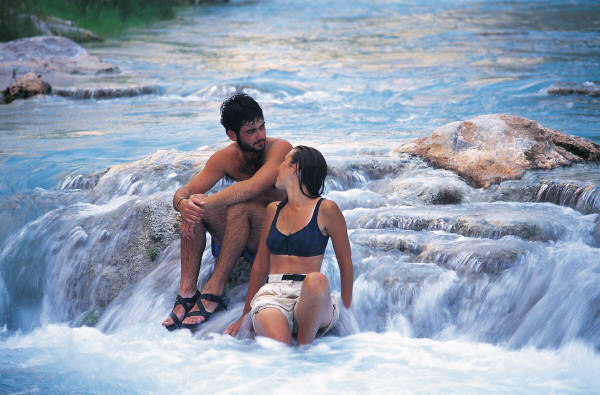
We are lucky here
in Central Oregon in the summer with mountain
streams that carry snow melted water. I
particularly like to sit down in a mountain stream after a long run and have
the cold water swirl around my legs and thighs.
And most of the water coming out of the tap in and around Bend
In addition to
reducing swelling and muscle soreness, ice baths can help prepare the muscles
for second hard effort. This may be
important if you are on a relay team or have back to back races on a weekend.
Enjoy the benefits
of cold water immersion this summer as you spend more time in the
mountains.
Monday, June 24, 2013
Fluid
Replacement: How Much Should I Drink?
Recently, a friend
asked how much fluid should be replaced during endurance exercise. It really depends on several factors which
include air temperature, humidity, body weight, and acclimation to exercise in
the heat. Just a 2% drop in body weight,
due to sweating and a lack of adequate fluids will cause a drop in
performance. Below is a chart that
provides a good starting place based on air temperature and body weight.

For instance, at 70 degrees (F) a 120 lb
person would consume 4 ounces of fluid for every mile run and a 180 lb person
would replace 5.9 ounces every mile. The
difference between the two runners is nearly two ounces. Now, that seems like a small difference
however, over the course of one hour that can add up to 16 ounces more for the
heavier, 180 lb runner. Calculating your
fluid replacement needs before the workout based on air temperature and your
body weight will make you feel and perform better.

Saturday, June 15, 2013
Variety
in Training
Variety in distance
running can provide better training and recovery, help you avoid staleness and
keep training fun and fresh. Variety in
training can take many forms including:
· Using
different training intensities
· Following
a hard – easy training pattern
· Varying
locations of workouts

Use different training intensities
The most successful
endurance running training programs use a variety of training intensities to
elicit different training adaptations. At the most simplest, two training
intensities – endurance and high intensity can be used. A more sophisticated approach uses five
different training intensities of recovery, endurance, lactate threshold, VO2max
and anaerobic. Training at different
intensities requires the use of heart rate training zones or training speeds to
get the most benefit. Training at the
lower intensities of recovery and endurance provides a foundation for
peripheral adaptations. These include
the building of microstructures in the muscle cell to increase energy and
deliver more oxygenated blood to the muscle.
The higher intensities of lactate threshold, VO2max and anaerobic have
more of a focus on central adaptations: an increase in the amount of oxygenated
blood leaving the heart.
Training at the
lower intensities helps return the body to homeostasis – the ability of the
body to return to equilibrium or balance.
This helps the body recover faster.
Training at the higher intensities results in quick and measurable training
effects. It also can result in injuries
and overtraining. Try to achieve a
balance in your training plan with a mixture of low and high intensity
workouts. Try to follow a high intensity
interval workout with recovery or easy endurance workout. Generally, a training week will include:
· 1 overdistance
workout of 2-3 hours
· 1-2 high
intensity interval workouts
· 1-3
recovery or endurance workouts
Pattern of hard – easy workouts
I call the overdistance
and interval workouts the “key” workouts of the week. They help you meet your fitness and
performance goals. The recovery or
endurance workouts add training volume and promote recovery. The “key” workouts are hard because of the length of the workout (2-3 hours) or the
high intensity. The recovery workouts
are easy because of the short
duration and low intensity. Each week
should have a pattern of hard – easy workouts. Follow one of the key workouts with a recovery
workout.
Location
We all have our
favorite running routes or locations. To
keep things fun try exploring new trails, routes and training locations. This keeps the mental freshness in your
running.
From a
physiological perspective, the body likes variety. It will positively respond to a variety of
training intensities, a hard – easy training pattern and different
locations. If variety is the spice of
life, then variety in distance running provides nourishment to improve fitness
and performance.
Friday, June 7, 2013
Have You Got The Right Trail Shoes?

So what should you look for in trail running shoes and how
should they differ from a traditional pair?
Good
Tread – With ever
changing varied terrain, you want a shoe with tread that's going to grip the
ground, as they will ultimately help you run more efficiently and keep you from
slipping on a rock, root or random bump.
Durable
Soles – Rougher terrain
on a trail means you'll need a pair of shoes that are designed to handle
surfaces that are potentially rocky. Unlike shoes designed for road running,
trail shoes will have a reinforced sole or a rock shield to reduce wear and
improve durability.
Sole
Height – Trail shoes will
generally sit lower to the ground than a traditional running shoe. This
lowers your center of gravity, giving you more stability on switchbacks or
roots across the trail, greatly reducing the risk of spraining an ankle or
eating dirt.
Light Weight – Trail running is hard enough that you don't need the added challenge of strapping weights to your ankles. When trying on a pair of shoes, consider how they'll feel when you're fatigued and still running.
Breathability – If you are accustomed to running in the rain, you'll know that this is important in any kind of shoe, but if your trail takes you through any sort of water, shoes won't get waterlogged, suffer any permanent damage by getting wet, or grow mold are a must.
Protection – On the trails you're far more likely to encounter
dirt, rocks, and other little bits and pieces that would be happy to sneak into
your shoes and drive your feet crazy. A trail shoe should have a fairly rugged
exterior that is designed to keep out unwelcome (and potentially painful)
visitors.
Age – The last thing to note is the lifespan of a shoe.
Ideally shoes are replaced after each 6-months of wear, and are also
alternated with a second pair for days of back-to-back training. This
gives the shoe time to dry and relax from compression, as even when the shoe
feels dry and looks good, it may not be and will break down over time.
You may have a shoe for a couple years, but don’t be afraid to get a new pair
even when your old kicks still “look” like they’re in good shape.
Sunday, June 2, 2013
Staying Hydrated During Summer Runs

Summer
is quickly approaching and with it comes a whole bunch of road races. Many
places have summer-fun 5Ks, 10Ks or other distance races in the morning. Races
are a great way to kick-off a hot summer day before you indulge in tasty BBQ
foods with family and friends. With summer fun comes hot weather, so you need
to take your hydration even more seriously. It's easy to get dehydrated quickly
in 90-plus-degree heat. To stay hydrated in any race or training run, try these
six tips.
Find Out Where Water Stations Will Be Along the Course
Know
how far apart the stations are and make sure this layout works for your needs.
If not, carry extra water with you. Most races have information including water
stations and possibly the course layout on a website. Go online and do your
research so you know what to expect before your race.
Supply Your Own Water
Even
if you're a total beginner, there is no reason why you can't carry a water
bottle with you. You can buy many styles online and in sports stores. Some even
come with special grip holders, but a regular water bottle from any grocery
store will do just as well in a pinch.
Stash Water Bottles Along Your Route
Many
races don't have a problem with you placing water bottles strategically along
the race route or having someone hand you a new bottle as you run. If you're
not sure whether this is allowed in your race, check with the race director
beforehand. As long as the bottles contain water or a sports drink, it
shouldn't be an issue. This method works especially well on long training runs.
You just need to do some prep work before you head out.
Use a Hydration Belt
A
hydration belt is a thin belt that wraps around your waist and holds one or
more water bottles. While you're running (or biking), you simply remove the
bottle from its holder, take a drink, and then put it back for later. There are
many styles out there, so look around for one that works best for you.
Get Yourself a Water Pack
A
water pack is essentially a backpack that you fill with water and wear on your
back for the entire run. Each pack has a straw that allows you to sip water
when you need it. At the beginning of the run, they obviously weigh more than a
water bottle, but as you continue drinking, that weight becomes lighter. Many
runners report that the packs are very comfortable and the added weight does
not bother them.
Add a Little Salt to Your Water
When
it's really hot and humid outside, you sweat more—and with that sweat you lose
salt. If you are running, especially for over an hour, think about adding just
a dash of salt to your water. You don't need to add a lot of salt, but a pinch
can help to stave off dehydration. If you use sports drinks, they will have all
the salt you need so don't add any to your drink. One last thing to note about
hydration: While you need to drink water during your race or training runs,
it's just as important to drink 8 oz. of water 30 to 60 minutes before and also
in the few days prior to your run. If you start the run dehydrated, it will be
almost impossible to make up for that mistake. If you are a runner, then water
is your friend. If you're running in hot weather, then water needs to be your
best friend.
Sunday, May 26, 2013
Getting the Most Out Of Your Stretching
The best way to prepare for vigorous running such as high
intensity intervals or plyometrics is to warm-up with 10-15 minutes of easy
running. Then do 6-10 dynamic stretching
exercises. A static stretch will
actually reduce the amount of force a muscle can generate. Be sure to move the muscles through a range of
motion to properly prepare for the activity. The warm-up increases blood flow and warms the
muscles so they can move more easily and efficiently. A good warm-up has been shown to decrease
injury rate.
A good warm down includes a minimum of 10-15 minutes of easy
running and static stretching – slow sustained stretching. Yoga, Pilates and foam rolling are all excellent post running activities.

Wednesday, May 22, 2013
Fad or new fave? The Elliptigo...
 Even ultramarathoners need a break from pounding the pavement and when it comes to cross-training, runners are hopping on the Elliptigo, an innovative combination of the elliptical and bicycle. Just like the super popular (and normally indoor) elliptical machine, you pump your legs in a circular motion, but doing so propels the bike forward. The low-impact exercise has become a favorite of 2008 Olympic marathoner Magdalena Lewy Boulet, track superstar Lauren Fleshman, and a host of other endurance athletes. Though with a price tag range of $2,000 to $3,499, it may take a while for Elliptigos to wheel into the mainstream fitness market. We recently spotted a few in West Bend. Have you seen any in action?
Subscribe to:
Posts (Atom)

 Posts
Posts